
If your GP or specialist has referred you for a pelvic ultrasound, you probably have two questions: what do I need to do beforehand, and what will actually happen? The short answer is that most pelvic scans work best when your bladder is comfortably full, because the fluid helps the sonographer see the structures behind it. At our clinic in Menai NSW, we ask for a valid referral, we explain each step as we go, and your report goes back to the doctor who referred you.
Key Takeaways
- A referral from your GP or specialist is required for a diagnostic pelvic scan at UBM Scans.
- A comfortably full bladder usually gives a clearer view, so follow the preparation instructions you receive when you book.
- The scan is performed in clinic, you stay in control of your comfort, and you can ask questions at any point.
- Your sonographer does not diagnose on the day. The report goes to your referring doctor, who discusses it with you.
What Is a Pelvic Ultrasound and Why Might You Need One?
A pelvic ultrasound, sometimes called a gynaecological ultrasound, uses sound waves to create live images of the organs in the lower part of your pelvis, including the uterus and ovaries. It involves no radiation, and the images are captured by a sonographer using a handheld probe.
Doctors refer patients for many reasons, and your referral will say what your doctor wants looked at. We do not interpret that reason or guess at what it might mean. Our role is to perform the imaging carefully and send the report to your doctor. If you have questions about why the scan was requested, your GP or specialist is the right person to ask.
It also helps to know what this appointment is not. UBM Scans runs two separate arms: referred diagnostic ultrasound, and non-diagnostic keepsake scans for expectant families. A pelvic scan belongs firmly in the first group, so it needs a referral and is a different experience from a baby scan. If you are curious about how the imaging types differ, our guide to 2D, 3D and 4D ultrasound explains the technology in plain language.
Pelvic Ultrasound Preparation: Why a Full Bladder Matters
Sound waves travel well through fluid and poorly through air. Your bowel often contains gas, and gas scatters ultrasound, which can make the pelvic organs hard to see. A full bladder helps in two ways. It gently lifts the bowel out of the way, and it acts as a clear acoustic window, so the sound waves pass through it to the structures behind.
That is the reason a full bladder ultrasound is so commonly requested for pelvic imaging. Without that window, the images can be harder to read, and in some cases a scan may need to be repeated. Preparation is a small effort that makes the appointment more useful for you and for your referring doctor. Jean Hailes for Women's Health’s guidance on bladder Health And Pelvic Floor Muscles | Jean Hailes sets this out in more detail.
The exact timing and amount of fluid can vary with the type of scan requested, so we do not suggest a one-size-fits-all rule here. When you book, we will tell you what to do for your appointment. If your referral is unclear, or you are unsure how it applies to you, ask us before the day rather than guessing.
How to Prepare on the Day
Good pelvic ultrasound preparation is mostly about planning ahead. These are the practical points worth thinking through:
- Bring your referral. A diagnostic scan cannot go ahead without one from a GP or specialist, so keep the original or an electronic copy handy.
- Follow the drinking instructions you were given. Finish drinking when advised, then try to hold on until after the scan rather than topping up late.
- Do not empty your bladder close to your appointment time unless you have been told it is fine to do so.
- Wear separate, loose clothing. A top and a skirt, or loose pants, make it easy to expose only the lower abdomen.
- Arrive a little early. A calm arrival helps, particularly when you are holding a full bladder.
- Bring previous scan details if you have them. If your doctor has mentioned earlier imaging, having that information to hand can be helpful.
If you take regular medication or have a health condition that makes fluid loading difficult, speak to your GP or ring us before the appointment. We can explain what the scan involves, but your doctor remains the right person for advice about your individual health.
Not sure how to prepare for your referred scan?
What Happens During a Referred Pelvic Ultrasound
Knowing the sequence can take much of the worry out of the day. Every appointment is slightly different, but the usual steps look like this.
- Check-in and referral check. We confirm your details and your referral, and answer any last questions.
- A brief explanation. The sonographer tells you what they will be doing, so nothing comes as a surprise.
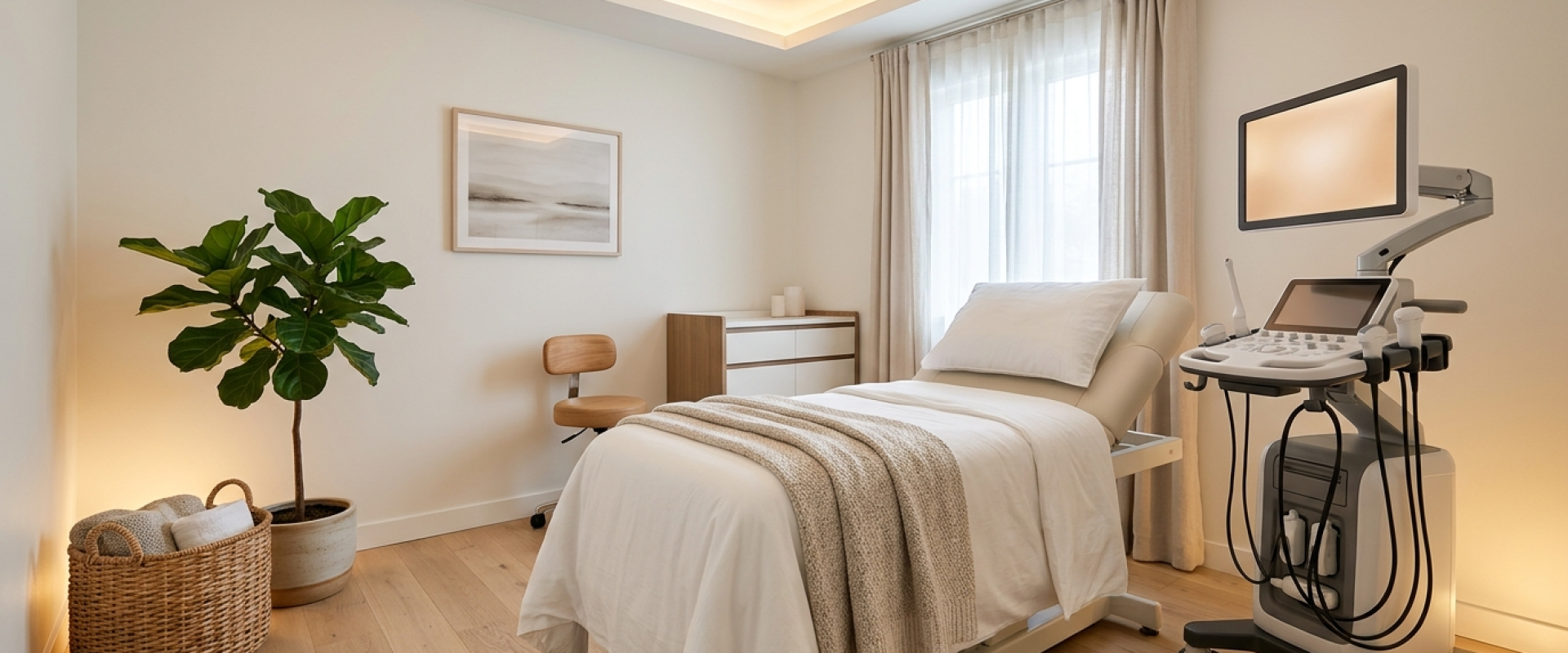
- Getting comfortable. You lie on the examination bed, and only your lower abdomen needs to be uncovered. A warm gel is applied to the skin.
- The scan. The sonographer moves a handheld probe over your lower abdomen, capturing images from different angles. You may feel some pressure, particularly with a full bladder, but the scan should not be painful. Tell the sonographer if you are uncomfortable.
- Finishing up. The gel is wiped away and you can get dressed. Depending on your scan, we may ask you to empty your bladder at a particular point.
Some referrals ask for a transvaginal ultrasound in addition to, or instead of, the scan over the abdomen. This uses a slim probe placed inside the vagina and is a different kind of examination. If your referral mentions it, or you are unsure, ask the clinic when you book what your particular request involves and how it will be explained and consented to on the day. You should never feel rushed into anything you do not understand.
A little preparation beforehand lets the sonographer see clearly, so your doctor gets the best possible information.
Comfort and Privacy During Your Pelvic Ultrasound
For many people, a pelvic scan feels personal, and it is completely reasonable to want to know how your privacy will be respected. Our approach is to keep things calm, clear and unhurried. The sonographer explains what they are doing before they do it, and you are welcome to ask questions or ask for a pause at any time.
Only the area being scanned needs to be uncovered, and the rest of you can stay covered. If you would like a support person with you, or you have particular needs around comfort, modesty or accessibility, mention this when you book so we can plan ahead. If you are unsure whether something can be accommodated, ask us. We would rather answer a question early than have you worry quietly about it.
A full bladder can be the most uncomfortable part of the visit. If you are struggling, say so. The sonographer can advise on what is possible, and you should not push through significant pain.
After the Scan: Where Your Results Go
Your sonographer will not tell you what your scan means, and that is deliberate. Diagnostic imaging is only one piece of the puzzle, and your referring doctor knows your history, your symptoms and why the scan was ordered. The images are recorded and a report is prepared for the clinician who referred you.
Your report goes to your referring GP or specialist, who will discuss it with you and explain any next steps. We do not promise a particular turnaround time, so if you are anxious about waiting, it is worth asking your doctor when they expect to have the report and when to book a follow-up appointment.
If you develop severe or sudden pain, or any symptom that worries you before or after your appointment, do not wait for a booking or a report. Contact your GP promptly, or go to your nearest emergency department if it feels urgent.
Booking a Referred Scan in Menai NSW and Campbelltown NSW
Our main clinic is at 10 Anzac Rd, Menai NSW 2234, and we currently also offer appointments at Macarthur Square, Campbelltown NSW 2560, on Saturdays by appointment. Our Menai clinic currently runs on Monday to Thursday evenings from 6:30pm to 8:30pm and Saturday mornings from 8:00am to 12:00pm, which can suit people who work or study during the day. Schedules can change, so please confirm availability when you contact us.
We welcome patients from the Sutherland Shire, Macarthur, south-west Sydney and the wider Sydney area. All of our scans are performed in clinic. Diagnostic scans may attract a Medicare rebate where eligibility and item requirements are met, but we cannot guarantee a rebate or an out-of-pocket amount. Ask us about current costs when you book, and we will explain what applies to you.
Please also keep your appointment types separate. If you are an expectant parent hoping for an early look at your baby with no referral, that is a different service. Our guide to reassurance scans explains how those non-diagnostic keepsake appointments work.
Frequently Asked Questions
Do I need a referral for a pelvic ultrasound at UBM Scans?
Yes. Every diagnostic scan we perform, including pelvic and gynaecological ultrasound, requires a valid referral from a GP or specialist. Keepsake baby scans are different and do not need one.
Why do I need a full bladder for a pelvic scan?
Fluid carries sound waves well and lifts the bowel out of the way, so a comfortably full bladder usually helps the sonographer see the pelvic organs more clearly. We will give you specific instructions when you book.
Will the scan hurt?
The scan itself should not be painful. You may feel pressure from the probe and from a full bladder. If you feel discomfort, tell the sonographer straight away.
Will the sonographer tell me what they find?
No. Sonographers capture the images, but interpretation belongs to your referring doctor. The report is sent to them, and they will talk through the results with you.
Is a transvaginal ultrasound the same as a pelvic scan over the abdomen?
They are different approaches. A transvaginal scan uses a slim internal probe, while an abdominal approach is performed over the lower tummy. Check what your referral requests and ask the clinic about it when you book.
What if I think my situation is urgent?
Do not wait for a booking. See your GP or go to an emergency department if you have severe or sudden pain or any symptom that concerns you.
Going In Prepared and Feeling Ready
A referred scan is easier when you know what is coming. Bring your referral, follow the bladder instructions you are given, wear clothing that is easy to adjust, and tell us early if you have any concerns about comfort or privacy.
The scan is one step in a conversation between you and your doctor. We capture the images carefully and send the report on, and your GP or specialist takes it from there.
If anything in this guide leaves you unsure, ask. We would much rather talk it through before your appointment than have you arrive wondering what to expect.
Ready to book your referred scan?